Paticca-samuppada
English
rendition :- S.Nopporn
The Law of Dependent Origination (Paticca-samuppada)
In summarized form or in brief
(Translation’s Note:-
This subject has been mistranslated
or mistreated by some Western and Asian authors; most of them have completely
misinterpreted the true meaning and view of dependent origination. The formula
of this law of dependent origination and a closer study of the subject run as
follows:-)
ปฏิจจสมุปบาท โดยย่นย่อ
ปฏิจจสมุปบาท เป็นปรมัตถธรรมที่แสดงโดยองค์สมเด็จพระสัมมาสัมพุทธเจ้า องค์ธรรมต่างๆในปฏิจจสมุปบาทธรรมจึงล้วนแต่เป็นภาษาบาลี ดังนั้นการเจริญวิปัสสนาในปฏิจจสมุปบาทธรรมนี้ จึงต้องศึกษาค้นคว้าคำบาลีที่เกี่ยวเนื่องก็เพื่อประโยชน์ในการโยนิโสมนสิการ จึงได้พยายามแปลคำทุกบาลีสอดแทรกไว้ตลอดเพื่อให้ท่านได้เข้าใจกระจ่างขึ้นเพื่อความสะดวกในการพิจารณาโยนิโสมนสิการ และเนื่องจากภาษาของเรานั้น มีความดีดดิ้นแปลได้หลายความหมายจริงๆและคล้ายภาษาบาลีอีกด้วย และยังมีการใช้กันอย่างผสมปนเปจนแยกกันแทบไม่ออก ดังเช่นคำว่า อารมณ์ ในภาษาไทยหรือในทางโลกใช้ในความหมายว่า ความรู้สึก เช่น อารมณ์ดี อารมณ์เสีย อารมณ์ร้าย, แต่อารมณ์ในทางพระศาสนาหรือภาษาธรรมแล้วถ้าแปลไปดั่งนั้นแล้ว ก็จะไม่ได้ใจความที่ถูกต้องจนเห็นธรรมได้เลย เพราะอารมณ์ในภาษาบาลีหรือภาษาธรรมมีความหมายว่า สิ่ง ที่จิตไปกำหนดหมาย หรือยึดไว้ในขณะนั้นๆ, คำว่า สิ่ง จึงมีความหมายครอบคลุมถึง รูป รส กลิ่น เสียง โผฏฐัพพะ(สัมผัส) ธรรมมารมณ์ ใดๆก็ตามที ที่จิตไปกำหนดหมายในขณะนั้นๆ ดังนั้นเมื่อนำคำว่าอารมณ์ในทางโลกไปใช้อย่างผิดๆหมายถึงไปใช้ในทางธรรม เช่นใน เวทนาที่แปลว่าการเสวยอารมณ์ ก็ย่อมเข้าใจความผิด ตีความหมายไปผิดๆ หรือไปใช้อารมณ์ในความหมายทางโลกหรือโลกิยะไปในความหมายของสมาธิที่หมายถึง การมีจิตกำหนดแน่วแน่อยู่กับอารมณ์ ก็ไม่สามารถหยั่งรู้ความหมายได้อย่างถูกต้อง หรือดังคำว่าวิญญาณ ที่กล่าวขึ้นเมื่อใด ปุถุชนมักคิดถึงไปในลักษณะเจตภูตหรือกายทิพย์หรือปฏิสนธิวิญญาณ ฯ. อันเป็นความเข้าใจไปในแบบโลกิยะหรือแบบโลกๆ ดังนั้นเมื่อนำความเข้าใจดังกล่าวมาประกอบการพิจารณาธรรม(ธรรมวิจยะ)ในปฏิจจสมุปบาทหรือขันธ์ ๕ ก็ตามที จึงย่อมไม่สามารถเข้าใจธรรมได้อย่างแจ่มแจ้งเลย จึงต้องเข้าใจวิญญาณอย่างโลกุตระหรืออย่างภาษาธรรมจึงจะธรรมวิจยะในธรรมนั้นๆได้อย่างถูกต้องแจ่มแจ้ง หรือดังคำว่าสังขารที่ทางโลกเมื่อเอ่ยถึงมักนึกไปถึงร่างกาย แต่ในทางธรรมนั้น สังขารหมายถึงทุกสรรพสิ่งที่ถูกปรุงแต่งขึ้น, และเหตุสําคัญที่สุดเป็นการเทิดพระเกียรติ์ของพระศาสดาว่าเป็นธรรมที่พระองค์ท่านได้ทรงตรัสรู้ชอบด้วยพระองค์เอง และสิ่งสําคัญอีกประการคือปฏิจจสมุปบาทธรรมนั้นกินใจความที่ลึกซึ้งกว้างใหญ่ไพศาลนัก เมื่อเกิดความเข้าใจหรือสงสัยสิ่งใด ก็ทําให้สามารถเชื่อมโยงใยกับธรรมอื่นๆของพระพุทธองค์ได้กลมกลืนและอย่างแจ่มแจ้ง อันล้วนแต่อ้างอิงพระบาลีกันทั้งสิ้น อันจักทําให้เกิดความเข้าใจอย่างหมดจด ทําให้แก้ข้อสงสัยในธรรมอื่นๆได้ดียิ่งขึ้น แต่เพื่อให้เกิดคุณประโยชน์สูงสุด ผู้เขียนจะพยายามเขียนสื่อและย่นย่อความในธรรมอันประณีต แต่แน่ละย่อมมีบาลีแทรกเช่นเคย อันเหมือนท่านเรียนแพทย์ก็ย่อมจำต้องทราบศึกษาคําศัพท์ทางการแพทย์เป็นธรรมดา เพราะจึงสามารถชี้เฉพาะเจาะจงในแต่ละสิ่งได้อย่างเฉพาะเจาะจงและเพื่อสามารถสื่อกับผู้อื่นด้วยความหมายเดียวกันอย่างถูกต้อง, ซึ่งจักก่อประโยชน์แก่ท่านในภายหน้าเมื่อนำไปศึกษาหรือโยนิโสมนสิการ หรือแม้แต่สนทนาธรรมกับผู้รู้อื่น แต่ถึงอย่างไรก็ตามสิ่งที่จะเขียนในบทนี้ก็คงจะไม่ง่ายนักที่จะทําความเข้าใจเช่นเคย จึงควรตั้งจิตให้สงบ แล้วอ่านอย่างพิจารณา เพราะความที่เป็นกระบวนธรรมของจิตในการเกิดขึ้นแห่งทุกข์ และดับไปแห่งทุกข์ของมวลมนุษยชาติทั้งหลายทั้งปวง ที่พระองค์ท่านตรัสไว้ว่า ลึกซึ้งยิ่งนัก จึงได้ครอบงํามนุษย์ทุกรูปนามมาตลอดกาลนานและอีกตลอดไป จนกว่าเราจะเข้าใจสัจจธรรมของพระองค์ท่านเท่านั้น จึงควรโยนิโสมนสิการด้วยความแยบคาย วางความเชื่อความเข้าใจหรือทฤษฏีเดิมๆ(ทิฏฐุปาทาน)ที่อาจขัดแย้งกันลงเสียขณะหนึ่ง แล้วพิจารณาด้วยใจที่สงบไม่ซัดส่ายด้วยแค่กำลังของขณิกสมาธิก็ดีงามแล้ว โดยอาศัยหลักเหตุผลเป็นสำคัญ และโดยเนืองๆเสมอๆ
Paticca-samuppada
The Law of Dependant Origination is
the ultimate truth expounded by the Buddha. The teachings are replete with Pali
terms. Insight development concerning this Law requires critical reflection
(yoniso – manasikara-โยนิโสมนสิการ) and its uses and
applications. Accordingly the interpretations of the Pali terms translated into
Thai are necessary since the Thai language is very flexible and carries several
meanings. Some Thai words are identical
to Pali terms to the extent that both languages seem to be inseparable. The
term arrom or emotion or mood in Thai or in the worldly
language means satisfactory or
unsatisfactory condition, but in the supramundane
sense it connects sense – objects , not
emotion at all otherwise
one can not see through the innards of the Dhamma . In the Pali language or
in the supramundane sense the word “sense-objects” mean objects consciousness.
The word “object” covers only corporeality, flavour, scent, noise, tangible
object (Phottabba-โผฏฐัีพพะ), cognizable object (Dhamma
rammana-ธรรมารมณ์). The original Pali (arammana-อารมณ์)
referred only to sense objects, though everyday speech it has now meant something
more like ‘mood’. Often, therefore, there is an emotional edge to this word.
The word ‘pity’ only means feeling of
pity which in the supramundane sense has been used in a wrong connotation, meaning
Samadhi or concentration of mind
(in the worldly sense). The act
of consciousness simply connotes in the eyes of most laypersons a soul or a
divine body which again is a mundane term. We take into account the language
or the words in supramundane ways;
then we can truly observe
the righteousness (Dhammacariya).
The most commendable point in honouring and revering His Enlightenment which
is infinite or boundless in nature is that we should learn this Law of
Dependant Origination (Paticca-samuppada)
carrying profound meanings.
In case of full understanding, we can link up with the rest of His doctrine
in a beautiful and perfect way to clarify all moral doubts and disintegration.
The Dhamma doctrine is quoted in Pali and can be understood much more than usual.
To have better benefits of true
understanding , the writer
of this
article would
like to
abridge this
perfect Dhamma, and
, of course, this abridgement
is full
of Pali
terms. When
one studies medicine ,
there are many
medical terms, and
the technical vocabularies
are specific to the
subjects or topics involved. We should
be calm, cool and collected
so that we can critically interpret
our own mind.
The mental phenomenon is
a process of the arising of
distress (dukkha) or suffering
and disappearing
of dukkha occurring in all
peoples. The Buddha
uttered these
profound sentences for
our own understanding of
His Dhamma,
especially the
use and
application of critical reflection
(yoniso-manasikara) , and
the leaving behind of clinging
(attachments) and erroneous opinions
(Ditthu-padana) .
We should
learn the discordant mind
unwaveringly with
one – pointedness of mind
(kanik-samadhi-ขณิกสมาธิ).
ปฏิจจสมุปบาท เป็นธรรมที่แสดงกฏของธรรมชาติถึงความเป็นเหตุเป็นผลและความเนื่องสัมพันธ์กัน จนเป็นผลให้เกิดความทุกข์ และแสดงเหตุที่ทําให้ทุกข์ดับลง ทุกข์ที่กล่าวนี้คือทุกข์ชนิดที่ดับหรือทำลายลงไปได้ กล่าวคือ อุปาทานทุกข์นั่นเอง ปฏิจจสมุปบาทความจริงแล้วตั้งอยู่บนหลักการวิทยาศาสตร์นั่นเอง เพียงแต่สิ่งที่พระองค์ทรงกล่าวไว้นี้เป็นเรื่องของจิตที่ลึกซึ้งอันจับต้องหรือสัมผัสให้เห็นเป็นตัวตนไม่ได้(นามธรรม) จึงไม่สามารถพิสูจน์ผลนั้นออกมาให้เห็นเป็นรูปร่าง(รูปธรรม) จึงบังเกิดผลได้แก่ผู้รู้ผู้เข้าใจด้วยตนเองเท่านั้น(ปัจจัตตัง) จึงเป็นที่กินแหนงแคลงใจอยู่ภายในจิต(วิจิกิจฉา)แก่ปุถุชนทั่วๆไปหรือคนที่ทันสมัยตามวัตถุนิยม เห็นหรือเข้าใจว่าพุทธศาสนาเป็นเรื่องของความล้าสมัยหรือไสยศาสตร์ จึงทําให้ไม่สามารถรู้ซึ้งถึงสิ่งที่มีค่าที่สุดที่ตนเองกําลังเพียรแสวงหาอยู่ทุกขณะจิตโดยไม่รู้ตัว อันคือความสุข และเป็นสุขจากการหลุดพ้น(สัมมาวิมุตติ) อันเป็นสุขสุดยอดเป็นที่สุดเสียด้วย กล่าวคือ สุข สงบ สะอาด และบริสุทธิ์
Paticca-samuppada
or the Law of Dependant
Origination is the dhamma
or natural law
which is
the root – cause and
root - effect and
inter-relatedness of the arising and
disappearing of
dukkha(ทุกข์)
or its
attachments of clinging (Upadana – dukkha). This
Law of Dependant
Origination rests on the
scientific principles . What
the Buddha
has explained
concerns a
profound intangible
mind or mental
factors (Namadhamma-นามธรรม)
which can not
be proofed or tested
as visible objects. (Rupa-dhamma-รูปธรรม)
. This is
directly experienceable
by the
wise only (Paccattang-ปัจจัตตัง)
. The worldlings or modern
men may be
uncertain and
indecisive over this (vicikiccha-วิจิกิจฉา)
. They regard
Buddha - sasana or
Buddhist religion (dispensation)
as backward
or superstitious , and
can not comprehend the essence
and value wittingly and consciously.
The real
nature of
Buddhism is deliverance
and right
emancipation (Samma-Vimuti-สัมมาวิมุตติ),
a bliss of highest
order or happiness, calm
, serenity , and purity.
กระบวนการเกิดขึ้นและดับไปแห่งทุกข์นี้ เป็นไปตามหลักการเช่นเดียวกันกับหลักการทางวิทยาศาสตร์ในปัจจุบันอันทันสมัยที่ต้องมีเหตุผล กล่าวคือมีเหตุ จึงเกิดผลขึ้น, แต่ทางพุทธศาสนารู้และเรียกหลักการหรือข้อธรรมนี้ตั้งแต่ ๒๕๐๐ กว่าปีมาแล้วว่า"อิทัปปัจจยตา" อันมีพุทธดํารัสไว้ดังนี้
|
เมื่อเหตุนี้มี ผลนี้จึงมี |
เพราะเหตุนี้เกิดขึ้น ผลนี้จึงเกิดขึ้น |
|
เมื่อเหตุนี้ไม่มี ผลนี้จึงไม่มี |
เพราะเหตุนี้ดับ ผลนี้จึงดับ |
กล่าวคือ สิ่งต่างๆที่เกิดหรือประกอบปรุงแต่งขึ้นนั้น ล้วนเกิดแต่เหตุปัจจัย ไม่ใช่เกิดขึ้นโดยไม่มีเหตุ ไม่ใช่เกิดขึ้นเพราะมันอยากจะเกิดเอง ไม่ได้เกิดขึ้นเพราะมีสิ่งใดหรือผู้ใดมาดลบันดาล ในขั้นแรกนี้เราต้องเข้าใจในหลักการนี้อย่างมั่นคงเสียก่อนโดยการโยนิโสมนสิการ มิฉนั้นเราจะทําความเข้าใจกระบวนการเกิดขึ้นและดับไปแห่งทุกข์นี้อย่างไม่แจ่มแจ้ง ขอให้พิจารณาตรงนี้เป็นพิเศษ ไม่ใช่ว่าเข้าใจแล้วเลยคิดว่าไม่สําคัญ จึงไม่โยนิโสมนสิการพิจารณาให้เห็นอย่างลึกซึ้งแจ่มแจ้งที่ประกอบด้วยเหตุผล, สังเกตุการดับว่าต้องดับที่เหตุ ถ้าดับที่ผล และเหตุยังอยู่ ผลก็จะเกิดขึ้นได้อีกเป็นธรรมดา
และเรียกธรรมหรือสภาวธรรมของการเกิดแต่เหตุมาเป็นปัจจัยกันดังนี้ว่า ปฏิจจสมุปบันธรรม
กระบวนการเกิดขึ้นแห่งทุกข์นี้ เกิดขึ้นเป็นวงจรชนิดที่หมุนเวียนต่อเนื่องอย่างไม่รู้จักจบไม่รู้จักสิ้น เพราะความต่อเนื่องสัมพันธ์เป็นเหตุเป็นผลต่อกันและกันเป็นวงจร กล่าวคือ เหตุๆนี้เป็นปัจจัยจึงเกิดสิ่งหรือผลนี้ขึ้น และสิ่งหรือผลที่เกิดขึ้นนี้ก็เป็นเหตุปัจจัยอันยังให้เกิดอีกสิ่งหนึ่งหรือผลอีกสิ่งหนึ่ง ดําเนินไปเช่นนี้เรื่อยๆ (คลิกมุมขวาล่าง เพื่อแสดงวงจรได้) วงจรจึงดําเนินเคลื่อนหมุนไปอยู่ตลอดเวลา แต่เป็นไปในลักษณะเกิดดับ เกิดดับๆหรือทำๆหยุดๆนั่นเอง จึงหมุนเวียน ทะยอยกันเกิด ทะยอยกันดับ เสมือนหนึ่งลูกคลื่นในท้องสมุทร อันไม่มีวันหยุดหรือจบสิ้น จึงเป็นกระแสธรรมชาติหรือสภาวธรรมแห่งเหตุปัจจัยอันยังให้เกิดความทุกข์ขึ้นครอบงำไปทั่วทุกโลกธาตุ
This process
of the arising and
disappearing of
dukkha is
based on modern scientific
principles of causes
and effects . Causal conditions
give rise to its results or
fruits. Buddhism has
been cognizant
of this
for over 2500 years , and
it is
called Idhabajata
or specific
conditionality . The Lord
Buddha has set forth as follows
:-
The conditioned or compounded things (karma-formations)
arise
because of causal condition
only ;
they do not
arise on their
own or at someone or something
else ‘s mercy . In
the beginning
, we must
comprehend this principle
firmly on the
basis of
critical reflection (yoniso-mana-sikara)
as well as the
extinguishing of its effect
totally because the causes
still remain. The effect
then crops up again or there is a relapse. This is the reason to call its causes
“the Dependent Origination”. (paticca-samuppada).
The Dukkha or suffering process is
a circuit
that spins or evolve
endlessly since its relatedness
is causal in itself.
That is to say
the causality gives rise to effect
, and the
effect causes another effect
perpetually. (Please click on the lower right to show the circuit.)
The circuit
moves on and
on; its character is
off-and-on type , and its
perpetual nature is
like the waves in an
ocean which has
no ending. This is
the principle
of nature which
permeates itself in all
elements of
dukkha or distress and
vexation (suffering).
When
there is a cause, the effect
due to the cause arises,
Therefore
the effect arises also.
If
there is no cause or the
cause is extinguished,
There
is no effect since it is
extinguished.
อนึ่งเป็นสิ่งที่ควรรู้อย่างยิ่ง เพราะเป็นสิ่งที่เนื่องสัมพันธ์กันอย่างยิ่งระหว่างกระบวนธรรมของชีวิตหรือขันธ์ ๕ และปฏิจจสมุปบาทธรรม หรือกล่าวได้ว่าเป็นเรื่องเดียวกัน กล่าวคือ ชีวิตย่อมดำเนินไปตาม กระบวนธรรมของขันธ์ ๕ อันไม่เป็นทุกข์๑. หรือไม่ก็ต้องดำเนินไปในกระบวนธรรมปฏิจจสมุปบาทอันย่อมยังให้เกิดความเร่าร้อนเผาลนกระวนกระวายจากการเวียนว่ายตายเกิดในกองทุกข์อยู่เนืองๆ๑. เป็นเพียง ๒ นี้เท่านั้นไม่เป็นอื่นไปได้.
กล่าวคือ ขันธ์ทั้ง ๕ ที่เป็นเหตุปัจจัยให้เกิดชีวิตขึ้นนั้น ยังมีการประสานทำงานกันในระหว่างขันธ์ทั้ง ๕ อย่างแนบแน่นอย่างกลมกลืนกันอยู่ตลอดเวลาที่ดำรงขันธ์หรือชีวิตอยู่อีกด้วย เปรียบเสมือนดังรถยนต์ที่ย่อมประกอบด้วยขันธ์คือส่วนหรือกอง จึงประกอบด้วย ส่วนตัวถัง ส่วนเครื่องยนต์ ส่วนเครื่องส่งกำลัง ส่วนล้อ ส่วนขับเคลื่อน ส่วนระบบเบรค ส่วนระบบไฟ ฯ. เมื่อกองหรือขันธ์ของรถมาประชุมกันจนแล่นได้ ก็เรียกกันโดยสมมติสัจจะกันว่า รถ ซึ่งย่อมกินความว่า อุปกรณ์ทั้งปวง อันดุจดั่งขันธ์ ย่อมต้องทำงานประสานสอดคล้องสัมพันธ์กันอีกด้วย จึงเรียกว่าได้ว่ารถได้ รถนั้นจึงอยู่ในอายุการใช้งาน จึงใช้ขับเคลื่อน หรือมีชีวิตนั่นเอง
เมื่อขันธ์ทั้ง ๕ ทำงานประสานกันอย่างดีงาม ไม่เกิดการแทรกแซงด้วยธรรมหรือสิ่ง(กิเลส)ที่เป็นเหตุปัจจัยให้เกิดทุกข์ขึ้น ก็เกิดกระบวนธรรมที่เรียกว่า กระบวนธรรมของขันธ์ ๕ อันไม่เป็นทุกข์และจำเป็นในการดำรงชีวิตยิ่ง(มีรายละเอียดอยู่ในบท ขันธ์ ๕) แต่ถ้าขาดสติให้อวิชชาร่วมกับอาสวะกิเลสเป็นเหตุเป็นปัจจัยให้เกิดสังขารอันเป็นไปตามกระบวนธรรมของปฏิจจสมุปบาทธรรมเสียเมื่อใด เมื่อนั้นย่อมเข้าสู่วังวนของความทุกข์ และส่วนใหญ่ของปุถุชนแล้ว ก็มักดำเนินชีวิตอยู่ในวงจรปฏิจจสมุปบาทนี้เป็นธรรมดาเสมอๆเนืองๆเพียงแต่เป็นไปโดยไม่รู้ตัวด้วยอวิชชา เหตุเพราะนอกจากความทุกข์โดยตรงแล้ว ยังมีความทุกข์ที่ซ่อนตัวอยู่ในรูปของความสุขที่เกิดที่เสพอยู่ในทุกขณะนั่นเอง แล้วเป็นเหตุปัจจัยให้เกิดความทุกข์ขึ้นในที่สุด ธรรมชาติของปุถุชนจึงก่อทุกข์กันอยู่ทุกๆขณะจิต เพียงแต่เป็นไปโดยไม่รู้ตัวด้วยอวิชชาเท่านั้นเอง!
However
, what should
be borne
in mind
is inter-relatedness of
animate processes or
5 aggregates. The
law of
dependent origination
is actually
identical . Life can
go on according to
dukkha, but
it would
go on
and on
according to the law of dependent
origination naturally burning our
passions of births and deaths
or transmigration.
These
5 aggregates are
the causality of life – principle
and coordinate
firmly and
constantly between the 5
aggregates and life system itself.
This is comparable to
a motor-car composed of
5 aggregates or categories
having body
(motor), engine,
wheels, brake system and
electronic charge. When
these categories work or
function together or
assemble , it is called in
mundane sense a
car which
connotes that all the categories
are comparable to aggregates which function
in conformity
with each other. This car
or vehicle
can move as
long as
it is
usable within
functional life span.
When
these 5 aggregates work in conformity
with each
other smoothly ,
there be no
interruption or no kilesa
(defilements) ,
causes and
conditions, which dukkha
(unsatisfactoriness) arises.
These processes
are called 5
aggregates which are not
dukkha, and are necessary
for living.
(See details in the chapter
on 5 Aggregates.) In case heedlessness
arises, un-knowing (avijja)
and mental
intoxication (asava – kilesa)
are causes
and conditions
(hetu – paccaya) to
be all things made up by
pre-existing causes (sankhara) or karma-formations.
This is the natural
state of
the law of dependent origination
and we
are unconsciously
and unknowingly in a whirlpool of
ignorance (avijja) due
to direct distress and
other latent dukkha
disguised as
a form of ipso
facto happiness. It
is natural that lay-persons
always or in every breath create
dukkha based upon their un
– knowing.
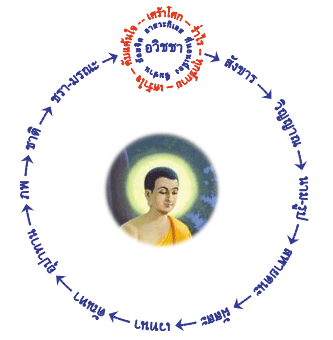
อาสวะกิเลสเป็นปัจจัยร่วมกับอวิชชา
กล่าวคือ
ความจําที่นอนเนื่องอยู่แต่แฝงด้วยกิเลส อันคืออาสวะกิเลส เป็นเหตุปัจจัยร่วมกับ อวิชชา
เนื่องจากกระบวนธรรมปฏิจจสมุปบาทนี้ เป็นวงจรที่หมุนเวียนแบบเกิดๆดับๆอยู่ตลอดเวลา จริงๆจึงไม่มีจุดเริ่มต้นหรือจุดสุดท้าย สามารถเกิดแต่เหตุปัจจัยใดๆในวงจรก็ได้ แต่ ณ ที่นี้ผู้เขียนจะขอเริ่มที่ความจําที่หมักหมมนอนเนื่องอยู่ในจิต(อาสวะกิเลส) สิ่งที่จะซึมซาบขึ้นมา ย้อมจิตให้ขุ่นมัวเศร้าหมองเมื่อประสบหรือกระทบกับอารมณ์ จึงมิได้หมายความถึงจิตที่ขุ่นมัวเศร้าเพราะอารมณ์เสียในความหมายในทางโลกๆแต่อย่างเดียว แต่หมายถึงความไม่บริสุทธิ์หมดจดหรือกิเลสสิ่งขุ่นมัวอันมีอยู่ แต่อยู่อย่างซ่อนเร้นอยู่ในจิตหรือจิตใต้สํานึก ซึ่งถ้าไม่ศึกษาโดยการโยนิโสมนสิการอย่างละเอียดและแยบคายก็จะมองไม่เห็น อันจะเป็นเหตุก่อให้เกิดความขุ่นมัว หงุดหงิด ฟุ้งซ่าน เป็นทุกข์ต่างๆนาๆขึ้นในภายหน้า กล่าวคือเป็นสัญญาความจําชนิดหนึ่งที่มีกิเลสหรือสิ่งที่ทำให้จิตขุ่นมัวแอบแฝงอยู่ หรือก็คืออาสวะกิเลสอันมี โสกะ ปริเทวะ ทุกข์ โทมนัส อุปายาส ในปฏิจจสมุปบาทนั่นเอง เราจะกล่าวว่าเป็นความจํา(สัญญา)อย่างหนึ่งก็ย่อมได้ แต่เจาะจงลงไปว่า เป็นความจําแฝงกิเลสที่แอบซ่อนอยู่ในจิตด้วย หรือที่เรียกกันในทุกวันนี้ว่าจิตใต้สํานึก เช่นความจําบางอย่าง เรื่องบางอย่าง โดยทั่วไปนึกไม่ออก จําไม่ได้ แต่เมื่อมีสิ่งหนึ่งสิ่งใดมากระตุ้นหรือเร้าหรือกระทบสัมผัส จึงจดจําขึ้นมาได้ และบางครั้งก็ผุดขึ้นมาเองอันมิสามารถควบคุมบังคับได้อย่างแท้จริงเพราะเป็นความจำได้อันเป็นธรรรมชาติในการยังชีวิตอย่างหนึ่ง ความทรงจําชนิดอาสวะกิเลสนี้มิได้ครอบคลุมแต่เฉพาะความทุกข์ที่เคยเกิดเคยเป็นเท่านั้นที่จะทําให้จิตขุ่นมัว,เศร้าหมอง แต่ยังหมายรวมถึงความจําได้ที่เกิดจากความสุขในทางโลกๆอีกด้วย เพราะความสุขที่เกิดแบบทางโลกๆนั้นจริงๆแล้วก็คือทุกข์อย่างหนึ่งนั่นเอง เพียงแต่ว่าเกิดขึ้นและเป็นไปอย่างละเอียดละเมียดละไม จนเกิดมายาของจิตว่าไม่ใช่ความทุกข์นั่นเอง เหตุเพราะจักทําให้เกิดความโสกะ คืออาการเศร้าโศกจากการเสื่อมหรือสูญเสียในสุขนั้นๆ และอาการปริเทวะ คือการโหยหา การอาลัย ด้วยคำนึงถึง ด้วยคิดถึงในความสุขนั้นๆ, อันล้วนเป็นเชื้อไฟที่ย่อมยังให้เกิดการลุกไหม้เผาลนกระวนกระวายต่อไปในกาลข้างหน้า อุปมาเหมือนดั่งฟืนเคยไฟ อันต้องก่อให้เกิดทุกข์ในภายหน้าเมื่อผุดขึ้นมาโดยไม่รู้ตัวอีกอย่างแน่นอน ! (รายละเอียดอยู่ในภาคขยาย)
เมื่อมีจิตที่ขุ่นมัวเศร้าหมอง และยังไม่มีวิชชาหรือไม่มีความรู้ความเข้าใจในเรื่องทุกข์และวิธีปฏิบัติเพื่อการดับไปแห่งทุกข์ตามความเป็นจริง กล่าวคือไม่มีวิชชา คือไม่รู้ธรรมของพระองค์ท่าน หรือธรรมชาติของทุกข์ตามความเป็นจริงนั่นเอง ที่ทําให้เกิดทุกข์และดับทุกข์, หรือยังมีอวิชชา อันคือไม่รู้ อริยะสัจ๔และปฏิจจสมุปบาทในการดับทุกข์ จึงเป็นเหตุให้วงจรของทุกข์มีแรงขับดันให้ดําเนินเคลื่อนหมุนต่อไปไม่จบสิ้น.......
The
law of
dependent origination
or Paticca-samuppda in brief
Mental
intoxication is
a condition of
the un – knowing.
We can
infer that our
constant Memory lurks
with mental defilements
(asava – kilesa) , causes and
conditions of
un-knowing (avijja) , since the process of
the law of dependent origination
is an
off - on circuit all the
time. There is no beginning and no end.
The mental defilements arise at any condition within the circuit. At
this juncture, the
writer begins
with latent memories
since the
mental defilements
(assava – kilesa) permeate
and cloud the minds and also
impact the
sense – objects. It
does not mean that
there are
certain defilements
lurking somewhere
inside the minds
or the
sub-conscious mentality. If
this is not tactfully reckoned
up with critical
reflection (yoniso – manasikara)
in full details, we may not
be able
to comprehend Dhamma
and this misunderstanding leads to
certain confusion,
jittery mind
and chaos . This
in turn
is a kind of
dukkha (distress)
arising in
the future and is
a perception (sanna)
with defilements or clouded
minds on
the lurk . They are called
mental defilements
(assava – kilesa) with
sorrowfulness and lamentations
within the
law of
dependent origination
process. We
can assert that
this perception (sanna)
is actually or
specifically a kind
of memories
lurking behind the minds
or sub-conscious mentality.
We may have forgotten the events
, but there is a
process which rouses or awakes our mentality or mental impression so
that we can recollect our memory. Sometimes it arises uncontrollably since this
memory is natural for all living persons. The mental defilements (assava-kilesa)
do not only cover distress which is prevalent but also includes memories based
on worldly pleasures or worldly distress. It is tactful, delicate defilements
forming mental illusion (maya) which is in itself a kind of dukkha since it
involves sorrow (soka) or lamentation, loss of worldly happiness (Pari-deva)
which hankers for and also regrets over it. This
ever-burning flame arouses the mentality arising in the future. We can compare
it to a hot coal which all the time keep burning unknowingly. (Details in the
index)
When the Mind is sorrowful and there
be no Transcendental Wisdom or a true understanding of dukkha (distress) and
the real way to extinguish it or not to know it correctly. The Lord Buddha is
teaching on dukkha. This ignorance (avijja) or un-knowing of the 4 Noble Truths
and the law of dependent origination causes us to be constantly in the whirlpool
of distress.
การเกิดขึ้นของทุกข์ จึงดำเนินไปดังนี้
อวิชชาเป็นปัจจัย จึงมีสังขาร
กล่าวคือ
เพราะอวิชชาร่วมด้วยอาสวะกิเลสที่นอนเนื่อง ดังที่กล่าวข้างต้น
เป็นปัจจัย ทำให้เกิด
สังขาร อันคือสิ่งปรุงแต่งทางใจให้เกิดการกระทําต่างๆนาๆทางกาย ทางวาจา ทางใจ
ตามที่ได้สั่งสม อบรม ประพฤติ ปฏิบัติ มาแต่อดีต ที่ย่อมแฝงกิเลสจากอาสวะกิเลส
ด้วยอวิชชาความไม่รู้และไม่เข้าใจในธรรม จึงเป็นเหตุปัจจัยร่วมกับอาสวะกิเลสความจำที่นอนเนื่องอยู่ในจิตที่เมื่อกระทบกับอารมณ์ หรือผุดขึ้นมาเองตามธรรมของชีวิต(ธรรมชาติ)อย่างหนึ่งก็ตามที จึงเป็นเหตุปัจจัยให้เกิดสังขารที่หมายถึงการกระทําต่างๆทั้งทางกาย ทางวาจา ทางใจ ตามความเคยชินที่ย่อมแฝงกิเลสตามที่ได้สั่งสม อบรม ประพฤติ เคยกระทําไว้(อาสวะกิเลส) ซึ่งเกิดขึ้นเป็นไปทั้งโดยรู้ตัวและไม่รู้ตัว ดังเช่น การประพฤติ การปฏิบัติ การกระทำ ความเชื่อ ความคิดต่างๆ บุคคลิกต่างๆ อันจักล้วนเป็นการกระทำที่แฝงกิเลสตามที่ได้กระทําสั่งสมไว้นั่นเอง(อาสวะกิเลส) อันเป็นสภาวธรรม(ธรรมชาติ)ของชีวิตอันยิ่งใหญ่ประการหนึ่ง, สังขารที่เกิดในปฏิจจสมุปบาทธรรมนี้ จึงหมายเฉพาะสังขารที่จะก่อให้เกิดทุกข์ขึ้น เพราะความที่แฝงกิเลสมาแต่อาสวะกิเลสนั่นเอง สังขารเหล่านี้จึงเป็นสังขารกิเลสอยู่ในที, เมื่อเกิดสังขารอันประกอบด้วยกิเลสอยู่ในทีขึ้นแล้ว จึงเป็นเหตุปัจจัยขับเคลื่อนให้ดำเนินไปตามกระบวนธรรมต่อไป ดังนี้
The Arising of The Distress is classified
thus:-
Un-knowing (avijja-อวิชชา)
has the compounded things (sangkhara-สังขาร) as follows:-
Un-knowing (avijja)
and latent canker (assava-kilesa-อาสวะกิเลส) as mentioned
above are the conditions which cause compounded things (sangkara)
in the body, mind, and speech as accumulated, trained and carried out from the
past. This has been latent defilements
(assava-kilesa), and latent memories in contact with
sense-objects (arammana). It arises unknowingly based
on the law of nature ( Dhammachat), a causal condition to create compounded
things in the body, mind, and speech which lurk defilements (kilesa-กิเลส)
as accumulated, trained and carried out from mental intoxication (assava-kilesa)
arising unknowingly and knowingly. We call it a Great Law of Nature (Dhammachat).
Compounded things arising from this law of dependent origination (paticca-sammupada)
means only compounded things which distress (suffering) arises due to latent
defilements (assava-kilesa). They lurk behind and finally be real defilements,
which become causes and conditions based upon the following processes:-
Causes and conditions
are shown in detail:-
Compounded things are the integrators
which lurk behind with defilements (assava-kilesa) and unknowing (avijja) which
cause act of consciousness and its functions. This is what practitioners may
be confused as to the term “act of consciousness” (vinnana). Why does it arise?
Should this act of consciousness arise beforehand? Does it mean that this act
of consciousness has already arisen? Or does it arise with Mind and Matter (namarupa)
or mentality and corporeality? There are many questions which may make practioners
jittery and doubtful (vicikiccha). In reality the act of consciousness does
not hover upon or pass the body as a soul (atta) or rebirth-consciousness (patisandhi-vinnana)
which some of us understand or adhere to unknowingly. This act of consciousness
is what the Buddha expounds the process of distress being inter-related to the
mind and body through consciousness. He explains that it arises on an off-on
circuit which is impermanence of consciousness. It is understood that the six
consciousness is composed of eye-consciousness (cakkhu -vinnana), ear-consciousness
(sota-vinnana) and so on so forth; or having a thorough knowledge (Ru-jaeng)
of the Twelve Bases (ayatana) which are in contact. The nerve system contacts
the eyes, ears, nose, tongue, mind and body which function as a result of causing
compounded things. It also behooves a principle of nature (sabhava-dhamma).
The consciousness in the Five Aggregates
or the law of dependent origination is supra-mundave (lokkuttara) or ultimate
in nature (paramatha). We must understand the investigation of the Truth (Dhamma-vicaya),
a Right View (samma-ditthi) of the noble ones (ariya). Consciousness therefore
means things or factors that communicate with each other within the Five Aggregates
or the nerve system. This act of consciousness has in itself a specific name
according to the arising sense-bases ; that
is, those who are living have the
act of consciousness in contact with sense-bases (outer ayatana), and sense-objects
and mind-objects (inner ayatana) which are the principle of nature. What originates
is natural (dhamda) as the chapter Maha-Tanha-Sangkaya-Sutta discourse has said
that the causes and conditions of the act of consciousness can be shown as follows:-
Sense-objects and mind-objects (Ayatana)
+ sense-organs (inner ayatana)
Consciousness such as form+ eyes ->
eyes consciousness
Noise + ears -> consciousness
Mind-objects (dhamma-rammana) + heart
-> mind - consciousness
As for this
law of dependent origination the compounded things work or function like
sense-objects and mind-objects (outer ayatana) which are mind-objects (dhamma-rammana)
whereas the sense-organs or mind is for the living persons or those with aggregates.
Considering this we may be perplexed
or perturbed that why consciousness precedes compounded things. How do compounded
things arise? If one understand
Critical Reflexion in full details,
one can then comprehend the whole issue.
When consciousness arises to recognize
the compounded things which all the defilements as mentioned above, the mental
process with the arising of dukkha still functions. The function is according
to the following causes and conditions:-
Causes and conditions are shown in detail.
Consciousness is its causes and conditions
and consequently has name and form (mind-and-body),
or
Nerve-system is in contact with full
knowledge of sense-objects, conditions and causes creating name-form or mind
and matter (body) which means life in totality functioning on its own (due to
the causality of arising compounded things).
Name-form means the assembly of the
entities and name or mind means aggregates or life or concrete things. The name-form
in the law of dependent origination connotes abstract thing (nama-dhamma) which
means the functions of life system towards the above-mentioned arising compounded
things (sankara). It is in itself abstract things (nama-dhamma).
That
is to say the arising of
the act of consciousness (understanding
of the sense – object) which is
in contact is a nerve – system
in itself. It is the causes and conditions to
create full and complete entities
. When this writer wrote a piece
on Critical Reflexion (yoniso – manasikara),
I felt jittery on it since we
have name
and form
already. Why
should there be name and
form again ? When the writer
understands more and has investigated
deeper, then the functions are
more specific. When we use the term
“Name”, we mean the functions
and do not mean
the corporeal name. Our entities
(form) are visible
only at the time of living
only, not living
permanently and unknowingly .
If we investigate
deeper into specific functioning
consciousness of
that has just
come into being
according to contacted environment;
for example ,
when we look
at a motor – car it has all
types of gadgets. We can call this
motor car a perfect one (compared metaphorically
to a person with a perfect name ) ready to
function . But this
motor – car may not go to
our desired destination if
there be no important force of consciousness
to achieve
it. Consequently
when the arising consciousness
does make the
name – form a perfect one it is
compared to a
perfect motor – car with
a driver who can go to our desired
destination . The Blessed One says
the consciousness is the causes
and conditions of the name
- form or the perfect
functioning of life system. When
name – form is together
and ready to function within
volitional activities, it
is the causes and
conditions for the following
processes :-
Causes
and conditions are shown in detail :-
Name – form
is causes and conditions,
and sense – bases arise,
or
Living
system functions due to complete
causes and conditions .
Consequently 6 feeling
systems or bases arise which are
called the six sense – spheres
arising and
ready for the action . These are
in contact with feeling organs and
sense – objects (arammana) This
is called the six sense – bases
(ayatana) or
6 sense – avenues who are ready
to function knowingly
. The sense - bases or
6 sense – avenues base
themselves on life system
and are ready to function due to :-
Eye – functioning with contact of form
Ear – functioning with contact of
sound
Nose – functioning with contact of odour
Tongue
functioning with contact of taste
Body
functioning with
bodily or physical or tangible
contact (photthabba)
Mind functioning with
contact of cognosible
object
Metaphorically and
concretely (rupa-dhamma) or
speaking in terms of personification (puggala
– dhitthana), we can compare the brake system of a
motor – car to a sense –
organ (inner ayatana ) . When this
motor – car is parked at
a car – park , it is compared to a person whose
name – form is perfect, but he
or she has not
functioned fully since
there is no driver (consciousness or
vinnana). When
there is no driving the brake
system will not work at all,
but when there is a driver
or consciousness
(vinnana) to go to the desired
destination , the motor – car can
function fully . When you put
brake on the motor – car
it is
comparable to
sense – objects which are
applied to work. You can bring the
car to a stop through using a brake system.
The
sense – spheres in the law of dependent origination
are identical to the name – form
which is above – mentioned . They
are eyes, ears, nose,
tongue, body and mind
which are called the mental factor (nama – dhamma) or the six senses
which can operate to accomplish the work of the above compounded things (sankhara).
The senses – bases (inner ayatana) are
the same as eyes , ears,
nose tongue , body and mind ; they
are part of the body or
sense – avenue which connects with the outside
world.
The
causality is shown in detail.
The sense – spheres are the causality
of touch or contact.
Nerve and feeling
system for the arising contact is
a causality for the contact (phassa).
When
the body and its accessories
arise or operate
fully , understanding and
communication of the compounded things
concerning contact
and ideation or thoughts
certainly come into being. Accordingly
, full physical communication arises . The
Lord Buddha expounds on contact
(phassa) as follows :-
A
person who
depends on eyes and form
, eye – consciousness arises. Concurrence
of the
Triple Gem is a contact which
we can write in
terms of a more
simple equation of the Dhamma
(sankara – dhamma) so that
Critical Reflexion (Yoniso
– manasikara) can be
attained.
(Click
your mouse at the arrow
for more explanation).
Eyes. Form ->
eye – consciousness -> contact
Therefore the compounded things
for the law of dependent origination are the ideation or the mind – objects
of a certain type, but it is an
ideation arising from the perception
(sanna) which
clouds the mind
(assava – kilesa) . Dukkha (distress and vexation or suffering)
certainly arises . Therefore, full components of complete
physical communication arise too. A simple equation of dhamma is shown
as follows :-
Mind – object (sankara) + mind ->
mental consciousness or mind – consciousness element
-> contact or mind – object (sankara)
+ mind -> mind – consciousness ->
contact (phassa).
Besides compounded
things arising from mental defilements (assava – kilesa)
, the sense – organs or inner senses
should function to be in contact
with touch (phassa). All
impressions through eyes, ears ,
nose tongue ,body arise from eyes
, ears, nose , tongue , body and mind .
They do glide
along living pattern
to be in contact with things
of nature
since these things of ordinary or
common phenomenon arise from
natural processes. When
there is a contact , consciousness
then arises.
The contact of these
senses may or may not
have dukkha
(distress) , depending on us whether
we are bestowed with Transcendental
Wisdom or with unknowing
. We classify
the Dhamma Process on 5 aggregates
as follows :-
Form + eyes ->
consciousness -> contact
Sound + ears -> consciousness ->
contact
Odour + nose -> consciousness ->
contact
Impression or contact + body ->
consciousness -> contact
Causes and
conditions are shown
in detail.
------------------------
Impression or contact is the conditions
and creates vedanna (sensation),
Or
Concurrence of the
Dhamma is the
genuine or real contact,
Which causes
Feelings in all sense – objects (arammana)
of that particular contact.
When
contact is made with one another completely,
feelings (vedana) or feelings
concerning contact and memories
or latent
perception (assava – kilesa) cause
feelings of different
kinds of knowing . For example, to be pleased, to be
satisfied, to be in accord
with our wish
concerning happy physical
contact (sukha – vedana), to be
not pleased
or not satisfied , to be
not in accord with our wish concerning
sorrowful physical contact (dukkha
– vedana) ; or to have neither pain nor happiness or to have intermediate
feeling (adukkha – masukha) is quite natural, and
causes feelings of all
kinds arising from perception
(sanna) due to latent
contact . This perception
(sanna) arises from defilements
(assava – kilesa) and
sensations (or feelings)
and is a part of nature ,
and functions accordingly . It causes
and conditions us to suffer from
distress due to
the unknowing of nature (avijja).
It exists unknowingly
and unwittingly.
The
Dhamma process that arises
is due to
the following causes and
conditions :-
Compounded things (sankara) + mind ->
mind consciousness ->
contact (phassa) ->
perception (assava - kilesa)
-> happy, sorrowful or intermediate
The writer will
describe in detail as follows
:-
Defilements and the unlearning
cause compounded things (sankara)
+ mind -> mind
consciousness contact -> perception
(assava – kilesa or defilements which
function or remember)
-> feelings or
sensations.
These
causes and conditions are
shown in detail.
-------------------------
Sensation
is the causes and conditions
in which craving arises,
or
Feelings
which arise from sensation
(arammana) or sense – objects or contact
are the causes and conditions
which
craving or no – craving arises from
the feelings.
What should be
kept in mind is the Critical
Reflexion (Yoniso – manasikara)
of the law of dependent
origination . It is one of the
natural processes or
the Dhamana
which is the sensations with
material gifts (amisa)
arising from compounded things
with defilements (assava
- <kilesa),
and unknowing (avijja) which are
lurking there.
When
there is feeling
(vedana), it turns to be
desire (tanha) or
craving . One may
have desire or no-desire
for the
feeling . According to the law of
nature, the action
and reaction are like throwing a
ball to the wall. There is certainly
the ball flinging backward
according to the law
of nature or one may feel
exposed to the heat, one
feel the
strong reaction
immediately or right
away . One can say
that it is the principle of
nature arising on
every worldling
(putujanna) due to
the unknowing and unmindfulness
of the
causes and the
extinguishing of
distress . The Lord
Buddha also teaches us the
unknowing (avijja).
Since
the craving arises concurrently
with the
extinguishing of the distress
as shown in
the law of
gifts arising from compounded
things with defilements
(assava – kilesa) and
unknowing (avijja).
The causes and
conditions are shown in detail .
Craving is the causes which attachment
arises,
Or
Desire or
craving or no – desire or
no – craving in the feelings is
the conditions
For the desire for
arising craving or arising
desire for itself .
When
there is
desire for or against
something , the mind is stilled,
but it is
an abstract
term or feeling which is
not consummated . The
nature of the
mind (which is a natural
principle or distress in
itself) is constantly
roused and
creates a
display of an illusion so
that one
endeavours to be craving or
not craving . This is a
kind of prey to deceive mankind all the time. They
receive their gains as contentment
or happiness which is
lurking within the
force of craving
or desire .
The bodily or mental
or speech deeds unknowingly
desire to have
maximum returns or gains.
The
causes and conditions of
this are shown in detail.
Attachment is the conditions for state
of existence.
Desire or
grasping for one’s
derivative matter is conditions
to create a state of
existence or a living place
of mind or the mental decision at
that which
depends upon the attachment (clinging).
When
the desire with defilements
to do something for contentment
of the craving
arises, the state of existence
or the mental
existence, the living
place mind or the
mental force of attachment
naturally arises . It means that
mental condition or
mental existence at that
time or at that control is under
the force of clinging (attachment).
The mental condition or the mental decision at
that time arises. Generally what
is under control to be
the attachment with defilements
for one’s
happiness naturally arises.
Existence in
this law
of dependent
origination or supramundanely
speaking or in the
ultimate language of consciousness
means the
mental existence or the mental
condition at that
time which
can be classified into 3
arising things :-
1) The sphere dominated by
sensual pleasures (kama-bhava)
. The law of dependent
origination means mental
condition under the
control of attachment related
to sensual pleasures and
worldly or sensual conditions
which are mundane
pleasures in corporeality
, and sensual pleasures.
2) Sphere of
form (rupa – bhava) means
the mental condition with attachment
of an individual who
enters the absorption of the Fine
– Material Sphere dominating a single
unit of cognition (vithi – citta) . The conduct
of living is normal but
still is partly under the
absorption of the
Fine – Material Sphere or under
the mental condition of
desire for existence becoming
or mind – object.
3) The Formless-Sphere
(Arup – bhava) means
mental condition under
attachment of an individual
who enters the
formless –sphere even though
mental conduct or
desire is not to have cognizable
object (Dhamma – romana) .
It
should be kept in mind that
when the existence
arises, the process of
future distress or the
sphere of Form and
the Formless – Sphere
may be happy in itself
since the attachment or clinging
is the causes and
conditions. We may be enjoying ourselves
unknowingly (Nanti)
which mean the
arising of the distress in
the future. At that
time, we
may be
very happy and
do not
feel remorseful.
This is due to
latent defilements
(assava – kilesa) without knowing
, which is a
principle of nature. We may
not feel
distressful at that time
but the dukkha
proliferates naturally with
defilements (assava – kilesa).
It
can be said
that the existence
which causes
happiness at that time is an
illusion which deceives worldlings
(puthu – janna-ปุถุชน)
unwittingly and
unknowingly in the
future with ignorance (avijja).
Causes
and conditions are shown
in detail.
Existence is the
conditions which causes births
and rebirths (jati)
or arising,
Or
A mental
place or mental decision.
It therefore is a
preliminary condition of
the arising of defilements.
When
the mind reaches its
dwelling place
or its
decision agreed upon by the mental
current of
attachment, the things that
arise on the mind
is the influence dominated by
the arising existence at
the time. We can
compare the things concretely . For
example , humankind who
are born in Thai existence are touched
by Thai
influence naturally and
unwittingly. The eating habits and
culture, etc, are automatically
Thai until
that person
parts away. The mind is likewise of the same kind. What arises in the
mind – existence or the aggregates
accords with the force of
dominating existence at the time.
Ideas, thoughts, deeds are in
accordance with
the force
of existence
which is the
attachment as a
condition .
These arising
existences whether it be
happiness or dukkha
(distress) or
being born a Thai or a mother
or a son
are part and parcel of
the Sensual Pleasures (kama-bhava),
or an
existence related
to sensual or
worldly pleasures. There
are also
the existence
of corporeality (rupa – bhava)
and the formless existence (arupa
– bhava).
The aggregates or
any animate system
arising of
the sensation in the law
of dependent
origination have craving
-> attachment ->
existence arising interuptedly
(Look at the process below for the term “birth” given in full details
for consideration.
But
the aggregates or life system can arise from
sensations with material gains dominated by force of existence or attachment
(upadanna). The perceptions means
the arising with latent defilements
or contentment turning into
aggregates (sannapadanna – khanda)
creating dukkha. Therefore
the khanda of compounded things (sangkara – khanda)
arises from aggregates which are
called a living
process dominated by or
has a
tendency to be aggregates of attachment
(upadanna – sanghara – khanda) . This process
is as follows:- mind – object
(Dhamma – ramaya) + consciousness
-> mind (sense – bases) -> contaact (phassa) -> sensation
+ craving -> attachment -> existence
->&nbssp; birth or rebirth (jati) ->
aggregates of attachment in
order .
When
there are aggregates of attachment (clinging)
going along with arising
wishes or clinging) ,or the eradication of defilements
of craving
called perfunctorily
as happiness, the process would
still go on and on . The
aggregates of the
arising compounded things naturally
occur with decay or aging
unwittingly or
unknowingly.
In case this does not arise as one
wishes or according to one’s
attachment of craving,
distress and vexation
occur immediately. But
the whole thing is not eradicated
as yet. The
more one is attached to
compounded things, the more
burning one suffers according to
one’s own decay.
One can
compare this burning unknowingly
with ignorance or
unknowing (avijja)
The
causes and
conditions are shown
in detail.
---------------------------------------
Birth
is a condition
with decay
and death,
(jati and marana),
grief, lamentation, distress, sad
– mindedness, distress (assava –
kilesa).
When
a thing or a phenomenon arises
from natural causes and
conditions or the thus – come (tathata),
there be impermanence,
despair and non-
self or
the Three Common Characteristics
which are the ultimate realities
(paraimattha). This distress , the
above mentioned
causes and conditions,
has now arisen
and is subject
to the
law of impermanence,
which constantly keeps
being unstable. The changing
and decay
as well as
the concocting of aging
(jara) are
according to
the force of
dominating existence
or attachment . Finally,
the despair functions on and on
in place of ultimate impermancence ,
proving that it
cannot be put
up with the
changing conditions or the
state of flux and
has to
pass away (marana). Due
to whatever
reason it can be
natural deviation
or annihilation or
facing death
by causal antecedent. The
egolessness manifests
itself or
arises by
means of
ultimate realities.
(Look
at the
term “jara” (decay).
(Look at
term “marana” (death).
Picture
showing 5 aggregates of attachment
on decay
which is
always changing
or compounded like a circuit
and is a burning
dukkha or
affliction and
vexation . This
arises from
aggregates of compounded
things in a
state of
nature (dham – majat)
which has
been shown above
. The aggregates
of compounded thing , jati
or birth
as mentioned above are
re – compounded to function
as a derivative
matter (upadaya – rupa) ,
creating 5 aggregates of attachment
to carry
on as shown
in decay
which is constantly fluctuating and turned
into a
long term dukkha.
Every
event we are
conscious has
a genealogy
in time,
but it
can also
be stated in terms of
temporal sequence.
To grasp its
organisation we can think
in terms
of mutual
and coincidental
dependence as well as in terms of
sequential causality,
craving -> attachment
-> existence -> desire
for aggregates + mind +
consciousness – mind -> aggregate
of sensations ->
defilements
5 aggregates
of attachment or
concocting decay aflame
or burning
with distress.
Aggregates
of compounded
things or
concocting dukkha
(distress) Ñ
aggregates of perception.
The
circuit shows
the burning
of the
5 aggregates of
attachment dominated
by attachment .
which
is altogether
an off – on
aggregate of attachment .
It is
said that
this is a burning distress. Look
at the circuit of
this law
of dependent origination
in detail. Check
the circuit
for consideration.
Do click .
When
there is
fluctuation and change or
a state of flux like
this for
a long
period , it depends
on the
force of arising
craving and
attachment or
an interruption of
the Dhamma
or other
things or
consciousness which is
finally put out
or faces
death in accordance
with the
Three Characteristics (tilakkhana).
This Dhamma
or all
these things
arising from
the defilements
due to
the compounded
things or
life system (which
is not put
out yet) has
to leave
an inscrutable
trace. Though
one can
not compare
it to
memory, the
latent result is
still there.
Mind can
remember affliction
and vexation
or happiness
arising from
the past
which is
a perception (sanna)
of the
principle of
nature in
all things
which can not
be left
out or
be committed to
memory. These can arise by
nature since it is
necessary for
living . The distress
or happiness that
has arisen
is committed to
memory in
our minds
or hearts
unwittingly but
latently. This can
arise in the
future . The Lord Buddha
calls this
perception (sanna) defilements
(assava – kilesa) composed
of grief
(soka), lamentation (pari
– deva) , distress (dukkha) , sad
– mindedness (dosa) , despair (upayasa) as
mentioned earlier in detail
on the law
of dependent
origination . It arises
due to
defilements (kilesa)
used as
a flame
burning easily like
a hot coal burning with
compounded things (sankara – kilesa)
arising from mental intoxication
. These
are the causes and
conditions arising from
avijja or un-knowing .
There is no
Transcendental Wisdom
or ultimate realities
(paramattha) of the Buddha who
can follow or
monitor these thoughts
or conducts.
The happiness arising
from the law
of dependent
origination is
according to the following
:- when craving for a certain object
arises, there is an attachment,
existence or a state of
becoming and birth .
One may be happy , but
decay – death, grief ,
lamentation, distress,
despair , sad – mindedness fluctuate
and extinguish happiness.
We keep
in latent
memory the
mental intoxication
whenever there is lamentation
or grief
for happiness
arisen from the Round
of Existence, there
are the causes and
conditions to
take part
in the circuit of
the law of dependent
origination time and again.
When one
can not respond
to this , it finally
fluctuates and
changes into
dukkha or
distress all the time. Accordingly,
one can say
happiness is a fine
dukkha or
distress (suffering) . One
can readily
say that
there is only
dukkha , and only
this dukkha
must be
eradicated.
The
burning dukkha
arises also
from decay though
one can have
this long – term
dukkha. This
can not be eradicated
in totality.
Happiness or ease
is likewise due to
latent ideation intoxicating the
minds waiting
for the chance
to arise by
un – knowing (avijja)
into the
Round of
Compounded Things
by avijja again
and again . This
can be according to the currents
of the causes
and conditions as
shown again in
the law
of dependent
origination . It can arise
eternally, or
it can
arise as long as
there be Transcendental
Wisdom as taught by
the Blessed One.
Whenever
mental intoxication
(assava - kilesa)
is the
causes and conditions
of the
un – knowing (avijja) , the
principle of nature, is
dominated by
not knowing in part
or in full the
ultimate realities . His
Transcendental Wisdom arises
if we
train and
practice correctly.
It can
not arise
naturally per se.
One has
to concoct and train
well . These concocted
compounded things
can be benevolent to extinguish
dukkha and
are very
necessary to arise and develop
the Noble Eightfold Path
(Chavetab – baddhamma) well.
When
un – knowing (avijja) exists
and is a
principle of
nature for
worldlingsglos (puthuj
– jana), causes and
conditions of defilements
(assava – kilesa) which
compounded things
(sankhara – kilesa) arise
. These are
the currents of
causes and
conditions which
evolve or
spin a time and again and
go on and on forever . This
circuit of dukkha
evolves unknowingly
forever causing
existence or
becoming jati
or births
and rebirths
creating the Wheel of Rebirths
or Rebirth Process full of
dukkha.
Accordingly ,
the Blessed One uttered
beautiful sentences which
shook and trembled the
entire sphere as
follows :-
‘This
is the
last life.
There is no more a
newer existence
or state of becoming.’
This
arises only Here and Now
or at
this very
Moment . The
end of
existence and rebirth does not mean
or denote an arising or existence
at the time of His
pari – nibbhan (full nibbhan )
Glossary
The definitions are mainly applicable
only to this translation :-
Amisa :
Unwholesome, unskillful.
Anatta : not – self.
Anicca , Aniccata : Impermanent ;
Impermanence.
Ariya : Noble.
Arom (Thai) :
Mental object, preoccupation.
Asava : Canker.
Avijja : Ignorance,
nescience, un – knowing.
Ayatana : Sense base.
Buddha : One
who became perfectly awakened
through self - discovery
of Dhamma.
Cakkhu:
The eye; The eye as
a sense door .
Citta:
Mind
Dhamma :
Usually means mental object;
the fourth
foundation of mindfulness.
Dhamma : The liberation law
discovered and proclaimed
by the Lord Buddha.
Dosa:
Hate.
Dukkha:
Suffering or minor distress
Ekaggata : One –pointedness of
mind.
Jara: Aging , decay.
Jati : Birth ; from
conception to parturition.
Kamma:
(Karma) Action.
Khandha:
Aggregate.
Lobha:
Greed or lust.
Magga : Path; The Truth of the Path.
Marana : Death.
Moha:
Delusion.
Nama : Mind, mentality.
Nama – rupa: name and form , mentality
and corporeality.
Nibbana : The extinction of suffering.
Nirodha:
Ceasing, cessation.
Nivarana:
Hindrances, Nibhan, Nibbana, Niravan.
Nana :
Knowledge.
Pali : The
ancient Indian language in which the suttas were written down.
Panca –khandha: The
five aggregates.
Phassa: Contact, Impression.
Puthujjana: Worldling.
Raga: Lust.
Rupa: Corporeality , Visual Object.
Samadhi: Concentration .
Sankhara:
Mental – formations. The processes that concoct and fashion, compounded
things ; birth – formations.
Sanna: Perception.
Sati: Mindfulness.
Tanha: Craving.
Upadana: Grasping , holding ; attachment.
Vedana: Feeling , sensation.
Vinnana: Consciousness
(not soul or divine body).

